
Can kids take CBD? Outside of one narrow, FDA-approved prescription medicine for two rare seizure disorders, the honest answer is no, not without a doctor directly involved in the decision. General over-the-counter CBD products, the kind found in most stores and online shops, have not been evaluated or approved as safe and effective for children. Plenty of parents ask this question anyway, usually because they’ve heard CBD might help with sleep, anxiety, or a specific medical condition, often after seeing it discussed online or recommended by another parent.
This guide is written for adults 18 and older who are researching on behalf of a child in their care, and it’s meant to inform that conversation, not replace it. Here’s what the FDA actually says, where the real exception lies, and what to do instead of guessing.
What the FDA Says About CBD and Children
The FDA has been clear on this point: with one exception, no product containing cannabis or cannabis-derived compounds has been approved as safe and effective for any patient population, child or adult. That exception is Epidiolex, a prescription medication that is nearly pure CBD, approved for patients 1 year and older to treat seizures associated with Dravet syndrome, Lennox-Gastaut syndrome, and tuberous sclerosis complex. It’s prescribed and monitored by a physician, manufactured under strict pharmaceutical standards, and dosed precisely for each patient’s weight and condition.
That’s a very different product from what’s sold as a general wellness CBD gummy or tincture. So when people ask, can kids take CBD the same way an adult might pick up an over-the-counter product, the FDA’s answer is no. Outside of Epidiolex, there’s no approved dosing, no required safety testing, and no oversight ensuring the product matches what’s on the label.
This distinction matters because the broader CBD market grew up around a regulatory gap. Hemp-derived CBD became widely available after changes to federal law in 2018, but that change addressed how hemp could be grown and sold, not whether CBD products meet the same safety and efficacy bar as an approved medication. The FDA has continued to state publicly that it’s monitoring companies that market CBD products in ways that could mislead consumers about what they’re actually approved to do, and pediatric use is exactly the kind of claim that draws the most scrutiny.
| Category | Epidiolex | General OTC CBD Products |
| FDA approval status | Approved drug | Not approved as safe or effective |
| Access | Prescription only | Sold over the counter |
| Dosing | Precise, weight-based | Not standardized |
| Oversight | Physician-monitored | Self-directed |
| Approved pediatric use | Yes, for specific seizure disorders | No |
Why the Risks Are Different for Children
Inconsistent Labeling and Dosing
Independent lab testing on unregulated CBD products has repeatedly found that what’s printed on the label doesn’t always match what’s inside the bottle, sometimes containing significantly more or less CBD than advertised. A child’s smaller body size means even modest dosing inaccuracies can have an outsized effect, and there’s no established pediatric dosing guidance for general-use CBD products, unlike for children’s pain relievers or allergy medication.
Possible THC Contamination
A JAMA-published study of non-FDA-approved CBD products found that some contained detectable levels of THC, the compound responsible for marijuana’s psychoactive effects, despite not listing it on the label. For an adult, that might go unnoticed. For a child, even a small unintended dose of THC can cause real intoxication and disorientation.
Limited Research on Developing Bodies
Most CBD research, even the research behind Epidiolex, has been conducted in the context of specific, severe medical conditions under close supervision. There simply isn’t a body of research on how CBD affects a healthy, developing child’s brain or body over time, which is part of why general use outside a prescribed medical context isn’t recommended.
Drug Interactions
CBD is processed by the same liver enzymes that metabolize many common medications, including some seizure medications, antibiotics, and antihistamines. In adults, this is something a doctor or pharmacist can screen for. In children who may already be on other prescriptions, an unsupervised CBD product introduces an interaction risk that nobody is actively monitoring, which is exactly the kind of variable a pediatrician needs to be aware of before anything is introduced.
When CBD Has Actually Been Used for Children
Severe, Treatment-Resistant Epilepsy
The clearest, best-documented case is Epidiolex for Dravet syndrome, Lennox-Gastaut syndrome, and tuberous sclerosis complex, conditions where seizures often don’t respond to standard medications. Clinical trials supporting its approval involved children as young as 1, with dosing and monitoring handled entirely by a neurologist.
Families typically start at a low dose that’s gradually increased over weeks while the care team tracks seizure frequency and watches for side effects like drowsiness or changes in liver enzymes, the same kind of careful titration you’d expect with any serious anticonvulsant medication.
Other Conditions Under Early Research
Researchers are also studying CBD for other pediatric conditions, including certain anxiety presentations and irritability associated with autism spectrum disorder, but this work is preliminary. None of it has resulted in an approved over-the-counter product, and any current use in these contexts occurs through a doctor and typically within a clinical trial, not through a retail purchase.
Parents sometimes come across promising early study results online, which is understandable, but a single small trial is a long way from the kind of evidence base that supports an FDA approval, and trial participants are screened, dosed, and monitored in ways that simply don’t happen with a product bought off a shelf.
| Use Case | FDA-Approved? | How It’s Accessed |
| Dravet syndrome, LGS, TSC seizures | Yes (Epidiolex) | Prescription, physician-monitored |
| General anxiety or sleep support | No | Not an approved use in children |
| Autism-related irritability | No, still researching | Clinical trials, doctor-supervised |
| General wellness or pain | No | Not an approved use in children |
What Parents Should Do Instead of Guessing
If you’re trying to figure out whether kids can take CBD, even the right question for your specific situation, the starting point isn’t a product, it’s a conversation. A few steps that actually help:
- Talk to your child’s pediatrician first. Bring up the specific symptom or condition you’re hoping to address, and let them tell you whether CBD, Epidiolex, or something else entirely is appropriate.
- Don’t substitute an adult product for a child’s dose. Over-the-counter tinctures and gummies are formulated and labeled for adult use, and cutting a dose down isn’t the same as a tested pediatric formulation.
- Ask about Epidiolex specifically if seizures are the concern. It’s the one pathway with real clinical evidence and physician oversight behind it.
- Report any product safety concerns. If a product’s label seems inaccurate or you suspect contamination, the FDA accepts consumer reports, and your pediatrician should know about it, too.
- Keep any CBD or hemp products out of reach. If you use CBD products yourself, store them the way you would any medication or supplement, away from curious kids who might mistake a gummy for candy.

Where Atmos Smoke Fits Into This Conversation
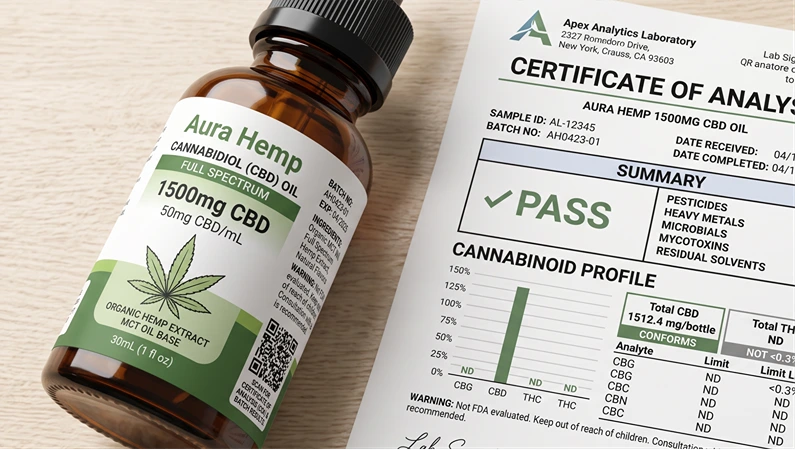
Atmos Smoke’s CBD products, like our tinctures and gummies, are formulated, lab-tested, and sold for adult use, not for children. We’re not the right resource for sourcing a child’s CBD regimen, and we’d rather say that plainly than sell you something that isn’t appropriate for your situation. What we can help with is transparency: every product we carry has a current certificate of analysis available through our CBD verification page. So, if you’re researching CBD generally, for yourself, or simply to understand the category better, you can at least see exactly what’s in a given product before you make any decision.
For broader guidance on choosing a CBD retailer you can trust, our guide to choosing the right CBD retailer covers what to look for in any product meant for adult use, including the kind of lab documentation a reputable seller should always be able to show you.
The Real Answer to Can Kids Take CBD
The research and regulatory picture is consistent: outside of Epidiolex for a small number of severe epilepsy conditions, kids take CBD safely only when a doctor is the one making and monitoring that decision, not a parent guessing based on a product label or an online recommendation. If your child has a relevant medical condition, the right first move is a conversation with their pediatrician, not a trip to a CBD shelf.
For more general background on how CBD products are formulated, dosed, and tested for adults, our CBD dosage guide and our broader CBD resources are there whenever you want to read further.
Frequently Asked Questions: Can Kids Take CBD
Can kids take CBD for anxiety or trouble sleeping?
Not as an over-the-counter product, no. There’s no FDA-approved CBD product for general childhood anxiety or sleep issues, so this is a conversation to have with a pediatrician rather than something to try on your own, especially since other evidence-based options for kids’ sleep and anxiety already exist and are worth exploring first.
Is there an FDA-approved CBD medication for children?
Yes, it’s called Epidiolex, and it’s approved specifically for seizures tied to Dravet syndrome, Lennox-Gastaut syndrome, and tuberous sclerosis complex. It’s prescription-only and managed by a physician, not something available over the counter or through a general retailer.
What are the risks of giving a child an over-the-counter CBD product?
The biggest risks are inaccurate labeling, unknown THC content, and a lack of established pediatric dosing. Independent testing has found real gaps between what’s on some labels and what’s actually in the product.
Could a child test positive on a drug test after taking CBD?
It’s possible, mainly because some unregulated CBD products contain more THC than their labels claim. This is another reason why product transparency and lab testing matter when CBD is part of a medically supervised plan.
Where can parents find reliable information about CBD before talking to a doctor?
Start with your pediatrician and use resources such as the FDA’s consumer guidance and a retailer’s certificate of analysis to understand any specific product. Atmos Smoke makes lab results for our adult CBD products available on our verification page, which is a useful reference point even if the decision itself belongs to your child’s doctor.