
CBD tolerance doesn’t appear to build up the way tolerance to other substances does, at least based on what current research understands so far. That’s a different story from THC, which is well known for requiring bigger doses over time to get the same effect, and it’s a question worth understanding if you’ve ever wondered whether your daily CBD routine will eventually stop doing much for you.
If your CBD seems less effective than it used to be, tolerance in the traditional sense usually isn’t the real explanation, even though it’s the first thing most people assume. Here’s how CBD actually interacts with your body, what the research says about long-term use, and what’s more likely going on if your usual dose doesn’t feel like it’s working anymore.
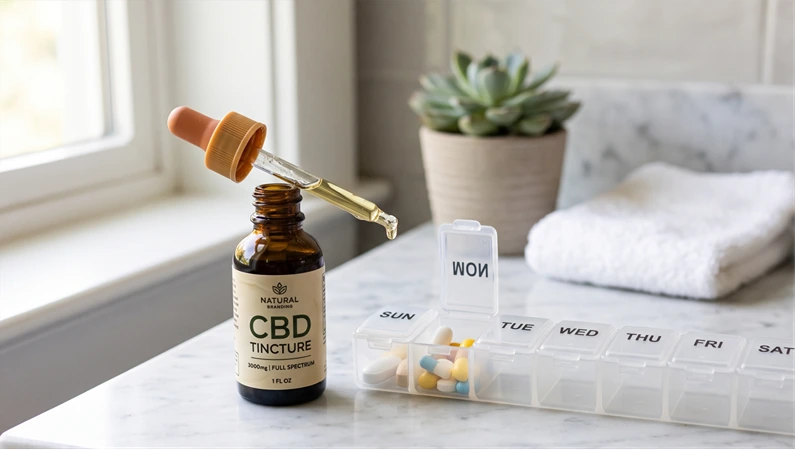
How CBD Tolerance Differs from THC Tolerance
The reason CBD and THC behave so differently when it comes to tolerance comes down to how each one interacts with your endocannabinoid system (ECS).
| Factor | THC | CBD |
| Receptor Interaction | Binds directly to CB1 receptors | Acts indirectly, modulates rather than binds |
| Typical Tolerance Pattern | Builds up with regular use | Generally does not build the same way |
| Dose Needed Over Time | Often needs to increase | Often stays the same, sometimes decreases |
Why THC Builds Tolerance and CBD Generally Doesn’t
THC binds directly and strongly to CB1 receptors in your brain, the same receptors responsible for its psychoactive effects. With regular use, your body responds by reducing the number of available receptors, a process called downregulation, which is exactly why people need more THC over time to feel the same way. This is the same general mechanism behind tolerance to many other substances, including opioids and alcohol, just applied to a different receptor system. CBD doesn’t work that way.
Instead of directly activating those receptors, it acts more as a modulator, supporting the ECS’s natural function rather than overriding it. Because there’s no receptor downregulation happening, the classic tolerance pattern seen with THC generally doesn’t apply.
What “Reverse Tolerance” Means
Some CBD users report needing less over time rather than more, a phenomenon often called reverse tolerance. The theory is that consistent CBD use helps your ECS function more efficiently, making your body more responsive to both your own natural endocannabinoids and any CBD you take. This idea is still more theory than settled science, but it shows up often enough in user reports that it’s worth knowing about if your usual dose suddenly feels stronger than expected.
If you want a broader look at how CBD relates to dependence in general, our piece on why CBD is non-addictive goes into more detail on that distinction.
What the Research Says About Long-Term CBD Use
The WHO and Harvard Health Findings
A World Health Organization report cited by Harvard Health Publishing found that CBD shows no effects indicative of abuse or dependence potential in humans, and noted no public health problems associated with pure CBD use. That’s a meaningfully different profile than substances known for both physical dependence and tolerance, and it’s part of why researchers generally don’t expect CBD to follow the same pattern.
Where the Research Still Has Gaps
Most of what’s known comes from smaller studies, animal research, and user-reported experience rather than large, long-term human trials, so the picture isn’t complete. Researchers have also pointed out that tolerance can mean different things depending on what’s being measured, whether that’s a shift in how the body processes CBD, a change in receptor sensitivity, or simply a person’s subjective sense that something feels less effective, and these don’t always move together. There’s also a notable exception worth mentioning: some patients using high-dose pharmaceutical CBD for seizure conditions have reported a reduced effect after extended use, and researchers are still working to understand why.
That’s a different population taking far higher, more consistent doses than someone using an over-the-counter tincture or gummy, so it doesn’t necessarily translate to typical consumer use, but it’s a reminder that long-term CBD research is still evolving.
Why CBD Might Seem Like It’s Not Working Anymore
If your CBD routine feels less effective than it used to, a few more common explanations are usually behind it before tolerance even enters the conversation.
Dosing for Your Body Weight and Needs
A dose that worked well when you started might simply be too low now, especially if your weight, stress levels, or routine have changed since you first started taking it. Larger body weight generally means a higher dose is needed to feel a similar effect, and that’s true from day one, not something that develops gradually. What feels like tolerance is often just an outdated dose that hasn’t been adjusted to match your current needs or body composition.
Inconsistent Product Quality
Independent lab testing has repeatedly found that some CBD products don’t contain what their labels claim, sometimes significantly less than advertised, and occasionally batch-to-batch variation even within the same brand. If a new bottle feels weaker than the last one, the product itself may be the issue rather than your body adjusting to it. Our guide to choosing the right CBD retailer covers what to check before you buy so you’re not left guessing whether it’s the product or your tolerance.
Inconsistent Timing or Use
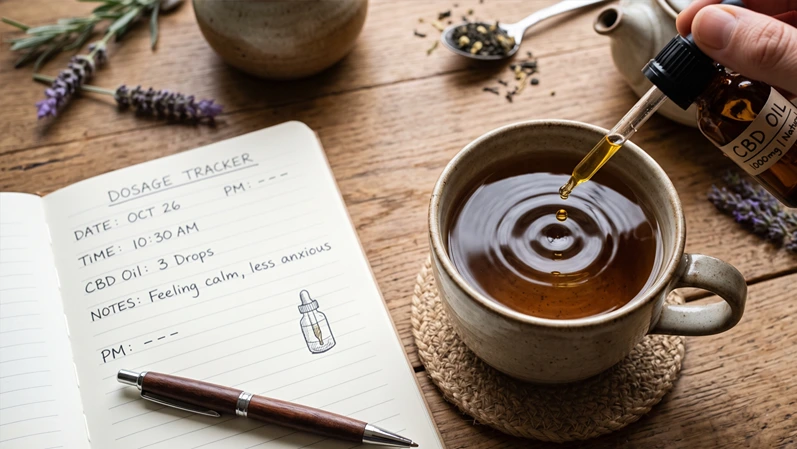
CBD tends to work best with steady, regular use rather than sporadic dosing, since it builds up gradually in your system. Skipping days or changing your timing often can make effects feel less predictable in a way that resembles tolerance without actually being it. Keeping a simple log of when and how much you take can make it a lot easier to tell what’s actually changed.
Choosing a Higher-Quality CBD Product
Lab Results and COAs
Look for a Certificate of Analysis (COA) from an independent lab on any CBD product you’re considering. A COA confirms the actual potency matches the label and screens for contaminants, which removes one of the most common reasons people feel like a product has “stopped working.”
Full-Spectrum, Broad-Spectrum, or Isolate
Full-spectrum products contain a range of other cannabinoids and compounds alongside CBD, which some people find more effective due to what’s often called the entourage effect, while isolate is pure CBD with nothing else included, and broad-spectrum sits somewhere in between. Switching between formats occasionally is a common strategy people use when their current product feels less effective, even though it isn’t related to tolerance in the traditional sense but rather a matter of finding which combination of compounds works best for your body.
Getting the Dosage Right From the Start
Our CBD gummies dosage guide breaks down how to figure out a starting dose and adjust it gradually, which applies just as well to tinctures and capsules. Getting this right from the beginning makes it much easier to tell later on whether something has actually changed or whether your dose just needs a small adjustment.
Why Shop at Atmos Smoke
Atmos Smoke carries a wide selection of lab-tested CBD products at our Texas locations in The Woodlands, Sugar Land, Richmond, and Shenandoah, and our staff can help you compare formats and strengths if your current routine isn’t doing what it used to. We carry tinctures, gummies, and capsules in a range of potencies, so adjusting your dose or switching formats doesn’t mean you have to start your search from scratch.
Prefer to shop from home? Our full online shop carries the same lab-tested selection for adults 21 and older. If you’re not sure whether you need a stronger dose, a different format, or just a better-quality product, ask us. We’d rather help you figure out what changed than have you assume tolerance is the answer by default.
Getting the Most Out of Your CBD Routine
Most of what feels like tolerance to CBD usually traces back to dosage, product quality, or consistency rather than your body actually adapting to it the way it would to THC or caffeine. Paying attention to those factors first, and reaching for a lab-tested product from a retailer you trust, solves the issue for most people without needing to take a break or chase a bigger dose.
Tracking what you take and how you feel for a couple of weeks is usually enough to spot the pattern, whether that turns out to be a dosage problem, a product quality issue, or something else entirely. If something still feels off after ruling those out, our team at Atmos Smoke can help you figure out what to try next.
Frequently Asked Questions: CBD Tolerance
Can you build a tolerance to CBD?
Current research suggests CBD doesn’t build tolerance the way THC or many other substances do. Because CBD doesn’t bind directly to the same receptors THC does, it doesn’t cause the receptor downregulation that drives classic tolerance. Some long-term or high-dose populations have reported reduced effects over time, but that pattern hasn’t been shown in typical consumer use.
What is reverse tolerance with CBD?
Reverse tolerance describes needing less CBD over time rather than more. The theory is that consistent use helps your endocannabinoid system function more efficiently, making your body more responsive to both your own endocannabinoids and any CBD you take. It’s based mostly on user reports so far rather than large clinical studies.
Why does my CBD seem like it’s not working anymore?
It’s usually dosage, product quality, or inconsistent use rather than tolerance. A dose that worked when you started might no longer match your current needs, or a new bottle may simply contain less CBD than the label claims. Checking your dosage and switching to a lab-tested product solves this for most people.
Should I take breaks from CBD to prevent tolerance?
Breaks aren’t necessary to prevent tolerance, but they can help you reset and reassess your routine. If your CBD feels less effective, a short pause followed by restarting at a clear, measured dose can help you figure out whether the issue was dosage, product quality, or something else entirely.
Where can I buy quality, lab-tested CBD products in Texas?
Atmos Smoke carries a full range of lab-tested CBD products at our Texas locations and online. You can find us in The Woodlands, Sugar Land, Richmond, and Shenandoah, or check our locations page for hours and directions.